
Key takeaways
- Explore the best pellet grills under 500 for smoking and grilling, with roomy cooking areas, steady heat, and features that suit beginners and seasoned cooks.
As an Amazon Associate I earn from qualifying purchases. This post may contain affiliate links at no extra cost to you.
Our top picks at a glance
4 products from this guide, in the order reviewed below.


As an Amazon Associate we earn from qualifying purchases. Prices and availability can change.
A pellet grill is one cooker that handles two very different jobs. On a Saturday it can hold a low temperature for hours while a pork shoulder or a brisket takes on wood smoke. On a weeknight it can run hot enough to grill chicken thighs, burgers, and vegetables for dinner. The same machine does both, because the same parts do both: a hopper feeds hardwood pellets into a fire pot, an auger moves them at a steady pace, a fan feeds the fire with air, and a controller watches the temperature and adjusts the feed. When the best pellet grills in this group are compared side by side, the differences that matter are the ones you can measure and feel: how much food fits on the grates, how long the hopper runs before it needs a refill, how the controller behaves, how many probes come in the box, and how easy the cooker is to clean after the food comes off.
This article looks at seven pellet grills that run on hardwood pellets only. None of them burns gas or charcoal as its main fuel, and none of them is an electric grill in the usual sense, even though every pellet grill uses electricity to run its auger, fan, igniter, and controller. Each model below comes with specifications drawn from research files that record what the maker or a listing actually states. Where sources conflict, or where a figure was not stated in the sources opened, this article says so plainly instead of picking a number and presenting it as settled. That matters more than it might seem, because a wrong cooking area or a wrong hopper figure can change how a grill fits a household, and a buyer deserves the honest version.
The seven models span a useful range. At one end sits the compact Z Grills ZPG-450A, a smaller cooker with a PID controller and a cover in the box. At the other end sits the Traeger Woodridge, with 860 sq in of cooking area and a 24 lb hopper. Between them are the Cuisinart 465 sq in model, two Camp Chef Woodwind models that share an 811 sq in cooking area but differ in features, the Traeger Pro 575, and the Pit Boss Pro Series 850. Every one of them is a wood pellet grill and smoker, and every one of them can grill, smoke, roast, and bake, though the way each one does those jobs is not identical.
Read the comparison table first for a quick scan, then read the section on how the models were chosen, then read each model section in order. The buying guide near the end explains the ideas behind the numbers, so a reader who has never owned a pellet grill can follow the reasoning, and the FAQ answers the questions that come up most often when people shop for their first pellet cooker. The goal is a clear, honest picture of seven real models, with their strengths and their limits stated side by side.
Comparison Table
| Model | Key Spec | Best For |
|---|---|---|
| Z Grills ZPG-450A Wood Pellet Grill | PID controller, 15 lb hopper, 8-in-1 cooking | Smaller patios and first-time pellet grill owners |
| Cuisinart Wood Pellet Grill & Smoker 465 sq in | 465 sq in across two racks, integrated sear zone | Weeknight grilling with room for a second rack |
| Camp Chef Woodwind WiFi 24 Pellet Grill | 811 sq in, 22 lb hopper, 4 meat probes | Cooks who want app control and four probes |
| Camp Chef Woodwind Pro 24 Pellet Grill | 811 sq in, Smoke Box, 4 meat probes, 6-year warranty | Cooks who want extra wood flavor from chunks and chips |
| Traeger Pro 575 Wood Pellet Grill | 575 sq in, D2 controller with WiFIRE, 18 lb hopper | App-led cooking with a hopper clean-out door |
| Pit Boss Pro Series 850 Wood Pellet Grill | 850 sq in, Flame Broiler searing, 5-year warranty | Large cooks with direct-flame searing in mind |
| Traeger Woodridge Pellet Grill | 860 sq in, 24 lb hopper, 10-year limited warranty | The largest cooking area in this set with long hopper runs |
How We Chose
The first rule was fuel. Every model in this set burns hardwood pellets as its fuel, with an electric auger, fan, and igniter doing the work of feeding and lighting them. No gas grill and no charcoal grill appears here, and no model was included on the strength of a fuel type it does not use. That rule keeps the comparison honest, because a pellet grill behaves differently from a gas grill and from a charcoal grill, and mixing fuel types would have made the table harder to read.
The second rule was verified specifications. Each model comes from research files that record what the maker or a listing states, with a source noted for each figure. Where the files record a conflict, this article reports the conflict rather than choosing a side. Where a figure was not stated in the sources opened, this article says it was not stated. A specification that cannot be verified is not filled in with a guess, and a figure that appears in two sources with two different values is not smoothed into one tidy number. Readers who compare models deserve to know which numbers are solid and which ones are not.
Cooking area came first among the measured figures, because it decides how much food fits at once. A 465 sq in grill and an 860 sq in grill serve different households, and the split between the main grate and the upper rack matters too: a wide main grate suits large cuts and full racks of ribs, while a generous upper rack suits chicken pieces, vegetables, and foods that cook away from the fiercest heat. The table and the model sections give the split wherever the research files record it.
Hopper capacity came next, because it decides how long a cook can run before a refill. A 15 lb hopper and a 24 lb hopper hold different amounts of pellets, and on a long smoke that difference can mean the difference between a cook that runs through the night without attention and one that needs a refill in the dark. Hopper features matter as well: a clean-out door or a pellet purge lets a cook swap pellet flavors or empty the hopper before storage, and those small features get used far more often than people expect.
The controller and the probes came after that. A PID controller holds a set temperature by adjusting the pellet feed, and app control over WiFi or Bluetooth lets a cook watch the temperature from inside the house. The number of meat probes matters on a long cook, because one probe watches one cut of meat, and a cook who smokes two briskets or a brisket and a pork shoulder at once needs more than one. Four probes, as on the two Camp Chef models here, change what a cook can watch at the same time.
Searing, cleanout, and warranty rounded out the list. Some pellet grills add a direct-flame mode or a slide plate that opens the fire to the grate, and that changes what the grill can do with a steak. An ash cleanout system changes how long cleanup takes, and that changes how often the grill gets used. A warranty term, where the research files state one, is listed with the model, and where the files record a conflict or no term at all, this article says so. Weight and size are listed where the files record them, because a 124 lb grill and a 165 lb grill are different things to move, and a grill that is too large for a patio is a poor fit no matter how well it cooks.
Z Grills ZPG-450A Wood Pellet Grill
- Fuel: wood pellets
- Controller: PID controller with electronic auto ignition
- Cooking modes: 8-in-1 cooking
- Hopper: 15 lb with pellet purge
- Meat probe: 1 included
- Output: 25,000 BTU per hour
- Size: 45 x 28 x 49 in
- Included: waterproof cover
- Total cooking area: sources conflict, with the listing title giving 459 sq in and the spec bullets giving 452 sq in, so no single total area is stated here
- Temperature: sources conflict, with the listing giving 180 to 450 degrees and guides giving a top figure of 475 degrees, so no single top temperature is stated here
- Weight: sources conflict, with 84 lb and 85 lb both appearing, so no single weight is stated here
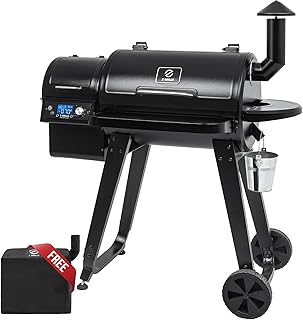
The Z Grills ZPG-450A leads this set because it is the most compact of the seven, and it shows what a smaller pellet grill can do when the controller and the hopper are well thought out. The PID controller is the heart of the machine: it reads the temperature inside the cooking chamber and adjusts the pellet feed to hold the set point, which is what makes a pellet grill different from a cooker that needs constant tending. Electronic auto ignition means the cook starts the fire with a switch rather than with a lighter, and that small detail matters on a cold morning or a rainy evening. Eight cooking modes cover smoking, grilling, roasting, baking, braising, and more, so the same cooker can handle a slow smoke on the weekend and a quick grill after work.
The 15 lb hopper is the smallest in this set, and that is a fact a buyer should weigh with open eyes. Fifteen pounds of pellets is plenty for a weeknight grill session or a medium-length smoke, but a very long overnight cook may need a refill, and the cook should plan for that. The pellet purge helps here: it lets the cook empty the hopper and swap in a different pellet flavor, or clear the hopper before the grill sits unused for a while. Pellets left in a hopper can absorb damp, and a purge is the simple way to avoid that problem. The waterproof cover in the box is a welcome inclusion, since a cover is often a separate purchase, and it shows that the maker expects the grill to live outside.
The conflicts in the recorded figures deserve a plain statement. The listing title and the spec bullets give different total cooking areas, 459 sq in and 452 sq in, and the listing and the guides give different top temperatures, so this article does not present a single area or a single top temperature for this model. The weight is the same story, with 84 lb and 85 lb both appearing in sources. None of those gaps changes the shape of the grill: it is a compact pellet cooker with a PID controller, a 15 lb hopper, a pellet purge, one meat probe, and a cover in the box. A buyer who wants a smaller footprint and a lower learning curve will find a lot to like here, as long as the hopper size fits the cooks they plan.
Pros: PID controller with electronic auto ignition; 8-in-1 cooking modes; pellet purge for flavor swaps and storage; waterproof cover included; compact 45 x 28 x 49 in size.
Cons: Total cooking area, top temperature, and weight are not settled across sources; the 15 lb hopper is the smallest in this set; only one meat probe is included.
Cuisinart Wood Pellet Grill & Smoker 465 sq in
- Cooking area: 465 sq in total, with 304 sq in on the main rack and 162 sq in on the secondary rack
- Cooking modes: 8-in-1, covering smoke, BBQ, grill, roast, sear, braise, bake, and char-grill
- Sear zone: integrated sear zone
- Weight: 83.6 lb
- Item model number: CPG-465
- Hopper capacity: not stated in the listing opened
- Temperature range: not stated in the listing opened
The Cuisinart Wood Pellet Grill and Smoker 465 sq in is the lightest model in this set at 83.6 lb, and its 465 sq in of cooking area sits in the middle of the range: larger than the compact Z Grills, smaller than the 811 sq in Camp Chef models and the 850 and 860 sq in models at the end of the set. The split between the racks is useful to picture. The main rack holds 304 sq in, which is the working surface for burgers, chicken, and larger cuts, while the secondary rack holds 162 sq in, which suits foods that cook above the main heat, such as vegetables, sausages, or items that need a gentler touch. Two racks give a cook options on a busy evening, and the upper rack keeps food warm while the main grate finishes the main course.
Eight cooking modes cover the full range of pellet cooking, from smoking and BBQ through roasting, searing, braising, baking, and char-grilling. The integrated sear zone is the feature that stands out most in the listing, because searing is the one job where a pellet grill can feel limited next to a hotter cooker. A sear zone gives the cook a place on the grill where the heat runs higher, so a steak or a chop can pick up a browned crust before it moves to a cooler part of the grate to finish. That matters for anyone who wants one cooker to handle both a slow smoke and a fast sear.
Two figures were not stated in the listing opened, and honesty requires naming them. The hopper capacity is not stated, so a buyer cannot tell from the listing how long the grill runs before a refill, and the temperature range is not stated either, so the low and high ends of the dial are unknown from that source. Those gaps do not make the grill a poor choice, but they do mean a buyer should look for those figures before deciding, or accept that the hopper will need checking during a long cook. At 83.6 lb, the Cuisinart is the easiest model in this set to move around a patio, and its mid-size cooking area fits a household that grills for a family and sometimes for guests, without the footprint of the largest models here.
Pros: 465 sq in across two racks; integrated sear zone for browning; 8-in-1 cooking modes; lightest model in this set at 83.6 lb.
Cons: Hopper capacity not stated in the listing opened; temperature range not stated in the listing opened; only one rack is the main cooking surface, so the upper rack suits smaller items.
Camp Chef Woodwind WiFi 24 Pellet Grill
- Cooking area: 811 sq in total, with 429 sq in on the lower rack and 382 sq in on the upper rack
- Hopper: 22 lb
- Temperature: 160 degrees at the low end, with Slide and Grill direct-flame mode reaching about 650 degrees per the maker
- Controller: PID controller with WiFi and Bluetooth, using the Camp Chef Connect app
- Meat probes: 4 stainless steel probes included
- Cleanout: Ash-Kickin' cleanout, plus pellet purge
- Sidekick attachment compatible
- Weight: sources conflict, with 132 lb on one page and 150 lb and 123 lb elsewhere, so no single weight is stated here
- Warranty: sources conflict on the warranty term, so no single term is stated here
- Grate material: not stated on the page opened
The Camp Chef Woodwind WiFi 24 is the first of two Camp Chef models in this set, and it brings the largest cooking area seen so far: 811 sq in, split nearly evenly between a 429 sq in lower rack and a 382 sq in upper rack. That near-even split is unusual, and it changes how the grill is used. The upper rack is not a narrow warming shelf; it is a real cooking surface, nearly as large as the lower rack, so a cook can run two full levels of food at once. Ribs can fill the lower rack while chicken and vegetables fill the upper rack, or a whole cook for a gathering can spread across both levels with room to spare. For a household that cooks for a crowd, that layout is a genuine advantage.
The controller is a PID unit with WiFi and Bluetooth, run through the Camp Chef Connect app, and it comes with four stainless steel meat probes. Four probes change the way a long cook is managed: a cook can watch four cuts at once, or watch a brisket, a pork shoulder, and the chamber temperature together, without opening the lid to check. Opening the lid lets heat escape and slows the cook, so probes that report to a phone are not a luxury; they are the tool that keeps the lid shut. The 22 lb hopper holds enough pellets for long cooks, and the pellet purge lets the cook swap flavors or empty the hopper before storage.
Slide and Grill is the direct-flame mode, and the maker lists it at about 650 degrees, which is the hottest setting this grill offers for searing. The Ash-Kickin' cleanout handles the ash that builds up in the fire pot, and that matters because ash buildup can choke the fire and make the temperature wander. A cleanout that works with a pull of a lever is the kind of feature that gets used every few cooks, and it keeps the grill running the way it should. The Sidekick attachment compatibility adds a path for cooks who later want a side burner or a flat-top griddle alongside the pellet grill, though the attachment itself is a separate item.
Two gaps need a plain statement. The weight is not settled, with 132 lb on one page and 150 lb and 123 lb on others, so this article gives no single weight for this model. The warranty term is not settled either, with different sources giving different terms, so no single term is given here. The grate material was not stated on the page opened. None of those gaps takes away from the cooking figures, which are among the strongest in this set: 811 sq in, a 22 lb hopper, four probes, and app control over a PID controller.
Pros: 811 sq in with a near-even rack split; 4 stainless steel meat probes; PID controller with WiFi and Bluetooth; Ash-Kickin' cleanout and pellet purge; Slide and Grill direct-flame mode.
Cons: Weight not settled across sources; warranty term not settled across sources; grate material not stated on the page opened.
Camp Chef Woodwind Pro 24 Pellet Grill
- Cooking area: 811 sq in total, with 429 sq in on the lower rack and 382 sq in on the upper rack
- Hopper: 22 lb
- Temperature: claimed range starts at 160 degrees; one comparison table lists a lower top figure, so the top end is not settled here
- Smoke Box: burns wood chunks, chips, or lump charcoal alongside pellets
- Meat probes: 4 included
- Searing: Slide and Grill direct-flame searing
- Cleanout: ash cleanout slide rail
- App control: WiFi app control
- Weight: 152 lb
- Size: 50 x 26 x 44.5 in
- Warranty: 6 years, covering body, hopper body, lid, legs, bottom shelf, and grates
The Camp Chef Woodwind Pro 24 shares its 811 sq in cooking area and its 22 lb hopper with the Woodwind WiFi 24, and it shares the four meat probes and the Slide and Grill direct-flame searing as well. The difference between the two Camp Chef models is the Smoke Box, and it is a difference that changes the flavor of the food. The Smoke Box burns wood chunks, chips, or lump charcoal alongside the pellets, which means a cook can add a chunk of hickory or a handful of applewood chips to a pellet cook and get a deeper smoke flavor than pellets alone give. Pellets burn cleanly and evenly, which is their strength, but some cooks want a heavier smoke on a brisket or a pork shoulder, and the Smoke Box is the tool for that. It is the single feature that sets the Pro 24 apart from every other model in this set.
The 811 sq in area is split the same way as on the Woodwind WiFi 24, with 429 sq in on the lower rack and 382 sq in on the upper rack, so the same two-level cooking applies: a full lower rack for large cuts and a nearly equal upper rack for a second round of food. Four meat probes come in the box, so a cook can watch several cuts at once without lifting the lid. The ash cleanout slide rail handles the ash from the fire pot, and the WiFi app control lets the cook watch the temperature and the probes from inside the house. The 22 lb hopper is large enough for long cooks, and the Slide and Grill mode opens the fire to the grate for searing when a steak needs a crust.
One figure needs care. The claimed temperature range starts at 160 degrees, but one comparison table lists a lower top figure, so this article does not state a single top temperature as settled. The weight is 152 lb, which makes the Pro 24 one of the heavier models in this set, and a buyer should plan for that: it is a grill that stays where it is put, and moving it across a lawn or up a step is a two-person job. The size is 50 x 26 x 44.5 in, so the footprint is a real one, and the patio space should be measured before the grill arrives. The warranty is 6 years, covering the body, hopper body, lid, legs, bottom shelf, and grates, which is the longest warranty term stated for any model in this set. For a cook who wants the deepest smoke flavor and the longest warranty in the group, the Pro 24 is the model that offers both.
Pros: Smoke Box for wood chunks, chips, and lump charcoal; 811 sq in with a near-even rack split; 4 meat probes; 6-year warranty on listed parts; Slide and Grill direct-flame searing.
Cons: Top temperature not settled across sources; 152 lb is heavy to move; the Smoke Box adds a step to learn for cooks new to wood chunks.
Traeger Pro 575 Wood Pellet Grill
- Cooking area: 575 sq in total, with 418 sq in on the main grate and 157 sq in on the upper rack
- Grates: porcelain-coated steel
- Temperature: starts at 165 degrees at the low end
- Hopper: 18 lb with clean-out door
- Controller: D2 controller with WiFIRE app control
- Meat probe: 1 included
- Weight: 124 lb
- Warranty: no term stated in the research files, so no warranty term is given here
The Traeger Pro 575 is the model that many people picture when they picture a pellet grill, and its place in this set is easy to explain. The cooking area is 575 sq in, split between a 418 sq in main grate and a 157 sq in upper rack, which is a layout that suits a family cook: the main grate holds the large cuts and the bulk of the food, while the upper rack holds smaller items and keeps food warm. The porcelain-coated steel grates are easy to brush clean after a cook, and the coating keeps food from sticking as hard as it does on bare steel. At 124 lb, the Pro 575 is lighter than the Pit Boss Pro Series 850 and the Camp Chef Woodwind Pro 24, and that makes it easier to shift around a patio when the season changes or the grill needs a new spot.
The D2 controller with WiFIRE app control is the feature that defines this model. The controller holds the set temperature by adjusting the pellet feed, and the WiFIRE app lets the cook watch and change the temperature from a phone, which means the cook can run a long smoke and still join the family inside. One meat probe comes in the box, so the cook can watch one cut of meat at a time; a second cut needs a separate thermometer, which is worth knowing before the first big cook. The 18 lb hopper sits between the 15 lb hopper of the Z Grills and the 22 lb hoppers of the Camp Chef models, and it comes with a clean-out door, so the cook can empty the hopper and swap pellet flavors without scooping pellets out by hand. That door gets used more often than people expect, because different woods suit different foods, and a cook who smokes salmon one day and brisket the next will want to change pellets between cooks.
The temperature range starts at 165 degrees at the low end, which is low enough for a slow smoke, and the top of the range is the top of the dial for this model. No warranty term is stated in the research files for the Pro 575, so this article gives none, and a buyer who wants a warranty term in writing should look for it before deciding. The Pro 575 is a balanced choice in this set: not the largest, not the smallest, not the heaviest, and not the lightest. Its strength is the combination of the D2 controller, the WiFIRE app, the hopper clean-out door, and a cooking area that fits a family without taking over the patio.
Pros: D2 controller with WiFIRE app control; hopper clean-out door for flavor swaps; 575 sq in across two levels; porcelain-coated steel grates; 124 lb is lighter than the largest models here.
Cons: No warranty term stated in the research files; only one meat probe included; the upper rack is much smaller than the main grate.
Pit Boss Pro Series 850 Wood Pellet Grill
- Cooking area: 850 sq in total, with 593 sq in on the main grate and 257 sq in on the upper rack
- Grates: porcelain-coated cast iron main grates
- Temperature: 180 degrees at the low end, with the Flame Broiler lever rated for direct-flame searing up to 1,000 degrees
- Hopper: 20 lb
- Controller: PID digital control
- App: SmokeIT app over WiFi and Bluetooth
- Meat probe: 1 included
- Warranty: 5-year
- Weight: 165 lb
The Pit Boss Pro Series 850 is the second-largest model in this set, and its 850 sq in of cooking area is split between a 593 sq in main grate and a 257 sq in upper rack. The main grate alone is larger than the entire cooking area of the Cuisinart and the Z Grills models in this set, which gives a sense of the scale: a full packer brisket, a rack of ribs, and a tray of chicken can share the main grate, with the upper rack left for vegetables and smaller items. The porcelain-coated cast iron main grates hold heat well and give good grill marks, and the coating keeps them easier to clean than bare cast iron. Cast iron grates are heavier than steel grates, and that weight shows up in the feel of the grill, but it also shows up in the cooking, because a hot cast iron grate sears food the moment it touches the surface.
The Flame Broiler lever is the feature that sets this model apart for searing. The lever opens a slide plate over the fire pot, so the flame reaches the grate directly, and the maker rates that direct-flame searing up to 1,000 degrees. That is far hotter than the normal cooking range, and it is the closest a pellet grill in this set comes to the searing heat of a dedicated grill. A steak that has been smoked low and slow can be finished over the open flame for a crust, and that two-step cook is one of the best uses of a pellet grill. The PID digital control holds the set temperature during the smoke, and the SmokeIT app over WiFi and Bluetooth lets the cook watch the cook from a phone.
The 20 lb hopper sits between the 18 lb hopper of the Traeger Pro 575 and the 22 lb hoppers of the Camp Chef models, and it holds enough pellets for long cooks without a refill in most cases. One meat probe comes in the box, so a cook who smokes two large cuts at once will want a second thermometer. The warranty is 5 years, which is a solid term for a grill in this group. At 165 lb, the Pro Series 850 is the heaviest model in this set, and it is a grill that should be placed where it will live and left there. The size and the weight are the trade for the cooking area and the Flame Broiler, and a buyer with the patio space for it will find that the trade is a fair one.
Pros: 850 sq in with a large main grate; Flame Broiler direct-flame searing up to 1,000 degrees; porcelain-coated cast iron main grates; PID digital control with the SmokeIT app; 5-year warranty.
Cons: 165 lb is the heaviest in this set; only one meat probe included; the upper rack is much smaller than the main grate.
Traeger Woodridge Pellet Grill
- Cooking area: 860 sq in total, with 520 sq in on the primary grate and 340 sq in on the upper rack
- Hopper: 24 lb
- Temperature: starts at 180 degrees at the low end
- App: WiFIRE app connectivity
- Meat probe: 1 included
- Cleanout: EZ-Clean grease and ash keg
- Accessory rail: P.A.L. Pop-And-Lock accessory rail compatible
- Weight: 138 lb
- Warranty: 10-year limited warranty
- Grate material: not verified on the pages opened, so no grate material is stated here
- Output: no BTU figure is stated in the research files, so no BTU figure is given here
The Traeger Woodridge closes this set with the largest cooking area of the seven: 860 sq in, split between a 520 sq in primary grate and a 340 sq in upper rack. The upper rack is the largest upper rack in this set, and that matters, because the upper rack on the Woodridge is a real cooking surface rather than a narrow shelf. A cook can run a full load across both levels, with large cuts on the primary grate and a second round of food above, and the whole cook stays inside one machine. The 24 lb hopper is also the largest in this set, and it pairs with the large cooking area in the way a buyer would hope: a big cook needs a big hopper, because more food and more hours mean more pellets, and a hopper that runs dry in the middle of a long smoke is a problem no cook wants.
The EZ-Clean grease and ash keg is the cleanout system, and it collects grease and ash in one keg that the cook can pull out and empty. Grease management is the part of pellet grilling that new owners think about least and notice most, because a grill that is hard to clean is a grill that gets used less. A keg that catches both grease and ash in one place makes the after-cook routine shorter, and that keeps the grill in regular use. WiFIRE app connectivity lets the cook watch the temperature from a phone, and one meat probe comes in the box. The P.A.L. Pop-And-Lock accessory rail is compatible with add-on accessories, so a cook can hang a shelf, a hook, or a holder on the rail and keep tools within reach.
The temperature range starts at 180 degrees at the low end, which suits a slow smoke, and the warranty is a 10-year limited warranty, the longest stated term in this set alongside the 6-year term on the Camp Chef Woodwind Pro 24. At 138 lb, the Woodridge is lighter than the Pit Boss Pro Series 850 and the Camp Chef Woodwind Pro 24, even though it has the largest cooking area, which is a useful combination for a buyer who wants size without the heaviest frame. Two figures are not stated: the grate material was not verified on the pages opened, and no BTU figure is given in the research files, so neither appears here. The Woodridge is the model for a buyer who wants the most cooking area, the largest hopper, and the longest warranty in this set, in one machine.
Pros: 860 sq in, the largest cooking area in this set; 24 lb hopper, the largest in this set; EZ-Clean grease and ash keg; 10-year limited warranty; WiFIRE app connectivity.
Cons: Grate material not verified on the pages opened; only one meat probe included; no BTU figure stated in the research files.
Buying Guide
A pellet grill is a simple machine with a few parts that decide how well it cooks, and a buyer who understands those parts can read a specification sheet with confidence. The hopper, the auger, the fire pot, the fan, the controller, and the grates do the work, and each one deserves a look before the grill is chosen. This guide walks through them in the order that matters most for a first-time buyer.
Cooking area comes first, because it decides how much food the grill holds at once. Measure the cooks, not the grill. A household that grills for four people most nights and for ten people on holidays needs a grill that handles the holiday load, not just the weeknight load. The main grate does most of the work, so its size matters more than the total, and a grill with a large main grate and a small upper rack cooks differently from a grill with two near-equal racks. The two Camp Chef models in this set have near-equal racks, so they spread food across two levels, while the Traeger Pro 575 and the Pit Boss Pro Series 850 have a large main grate and a smaller upper rack, so they pile the main cook on one level. Neither layout is wrong; they suit different cooks. Count the largest single item the grill will hold, such as a full brisket or a full rack of ribs, and check that the main grate fits it without folding or cutting.
Hopper capacity comes next, because it decides how long a cook runs before a refill. A hopper that holds 15 lb of pellets and a hopper that holds 24 lb of pellets are different tools for different cooks. A short grill session uses a small amount of pellets, so a small hopper is no burden on a weeknight. A long smoke that runs for ten hours or more uses far more, and a small hopper may need a refill in the middle of the night. A hopper clean-out door or a pellet purge is worth having in either case, because it lets the cook empty the hopper and change pellet flavors, or clear the hopper before the grill sits unused. Pellets that sit in a hopper through damp weather can swell and jam the auger, so the ability to empty the hopper is a practical feature, not a decoration.
The controller is the brain of the grill, and a PID controller is the standard to look for. A PID controller reads the chamber temperature and adjusts the pellet feed in small steps to hold the set point, which keeps the temperature steady through wind and through the opening and closing of the lid. A simpler controller that feeds pellets on a fixed cycle will swing wider, and that swing shows up in the food. App control over WiFi or Bluetooth is a real help on a long cook, because it lets the cook watch the chamber temperature and the meat probes from inside the house, and it sends an alert when a probe reaches its target. A controller that only works from the grill itself is fine for short cooks, but a long smoke is easier with an app.
Meat probes deserve a count before the grill is chosen. One probe watches one cut of meat, and a cook who smokes a brisket and a pork shoulder at the same time needs two probes, plus one for the chamber if the grill does not report the chamber temperature separately. The two Camp Chef models in this set include four probes each, which covers most cooks a household will ever run. The other models in this set include one probe, which is enough for a single large cut and a fair start for a new owner, but a second thermometer is a sensible early addition for anyone who cooks two large cuts at once.
Searing is the job that separates pellet grills from one another most clearly. A pellet grill holds a steady low temperature well, and most of them reach a high temperature for grilling, but a true sear needs direct flame on the grate. The Pit Boss Flame Broiler lever and the Camp Chef Slide and Grill mode both open the fire to the grate, and the Cuisinart sear zone gives a hotter patch on the grill. A buyer who loves a browned crust on a steak should look for one of those features, while a buyer who mainly smokes and roasts can treat searing as a secondary concern.
Cleanout and grease management decide how the grill feels after the food comes off. Ash builds up in the fire pot with every cook, and grease collects in a tray or a keg, and both need regular attention. A cleanout that works with a lever or a slide rail takes a minute, while a cleanout that needs the grates and the heat shield removed takes far longer, and the longer job is the one that gets skipped. The EZ-Clean keg on the Traeger Woodridge and the Ash-Kickin' cleanout on the Camp Chef Woodwind WiFi 24 are examples of systems that keep the routine short. A short routine means the grill gets cleaned on schedule, and a grill that is cleaned on schedule cooks better and lasts longer.
Weight, size, and warranty close the list. A grill that weighs 83.6 lb and a grill that weighs 165 lb are different things to move, and the patio should be measured before the grill arrives, not after. A grill that needs two people to move should be placed where it will live and left there. A warranty term, where one is stated, is worth reading in full, because the term and the parts it covers are the promise the maker stands behind. The Traeger Woodridge lists a 10-year limited warranty, the Camp Chef Woodwind Pro 24 lists 6 years on listed parts, and the Pit Boss Pro Series 850 lists 5 years. Where the research files record a conflict or no term at all, this article says so, and a buyer should ask for the term in writing before deciding.
One last point matters more than any single specification. A pellet grill is a cooker that rewards a cook who learns it. The first few cooks teach the owner how the grill holds temperature in wind, how fast the hopper empties on a long smoke, and how the probes behave. Keep notes on those first cooks, and the grill will become a reliable tool. The models in this set differ in area, hopper, probes, and features, but they share the same idea: hardwood pellets, a steady controller, and a fire that a cook can trust for hours at a time.
FAQ
How does a pellet grill work?
A pellet grill burns hardwood pellets as its fuel. An auger moves pellets from the hopper into a fire pot, where an igniter lights them, and a fan feeds air to the fire. A controller reads the temperature inside the cooking chamber and adjusts the pellet feed to hold the set point. The cook sets a temperature on the controller, and the grill holds it, which is why a pellet grill can smoke a brisket for hours with little attention. The smoke from the burning pellets flavors the food, and the same machine can grill, roast, bake, and braise by changing the set temperature. Every model in this set works this way, with an electric auger, fan, and igniter running the fire.
How much cooking area do I need?
The answer depends on the largest cook the grill will handle, not the average one. A 465 sq in grill suits a household that grills for a family, while an 811 sq in or 860 sq in grill suits a household that cooks for guests and for gatherings. Count the largest single item, such as a full brisket or a full rack of ribs, and check that the main grate fits it. Then count the side dishes and the second round of food, and check that the upper rack holds them. The two Camp Chef models in this set have near-equal racks, so they spread food across two levels, while the Traeger Pro 575 and the Pit Boss Pro Series 850 have a large main grate and a smaller upper rack. A grill that is too small for the holiday cook is a poor fit, even if it handles weeknights well.
Can a pellet grill sear a steak?
Yes, and the models in this set do it in different ways. The Pit Boss Pro Series 850 has a Flame Broiler lever that opens a slide plate over the fire pot, and the maker rates the direct-flame searing up to 1,000 degrees. The Camp Chef models have a Slide and Grill mode that opens the fire to the grate, with the Woodwind WiFi 24 listing about 650 degrees for that mode. The Cuisinart model has an integrated sear zone for browning. A steak that has been smoked low and slow can be finished over direct flame for a crust, and that two-step cook is one of the best uses of a pellet grill. A buyer who sears often should choose a model with a direct-flame mode or a sear zone.
How do I clean a pellet grill?
Cleaning has three parts: ash, grease, and grates. Ash builds up in the fire pot and should be cleared regularly, and the models in this set handle that in different ways: the Camp Chef Woodwind WiFi 24 has an Ash-Kickin' cleanout, the Woodwind Pro 24 has an ash cleanout slide rail, and the Traeger Woodridge has an EZ-Clean grease and ash keg that collects both in one place. Grease collects in a tray or a keg and should be emptied before it builds up. The grates should be brushed while they are still warm, and the porcelain-coated grates on the Traeger Pro 575 and the Pit Boss Pro Series 850 are easy to brush clean. A grill that is cleaned on schedule cooks better and holds its temperature more steadily.
What should I look for in a controller?
Look for a PID controller, which holds a set temperature by adjusting the pellet feed in small steps, rather than a controller that feeds pellets on a fixed cycle. App control over WiFi or Bluetooth is a real help on a long cook, because it lets the cook watch the chamber temperature and the meat probes from inside the house. The Traeger models in this set use WiFIRE app control, the Camp Chef models use WiFi and Bluetooth app control, and the Pit Boss Pro Series 850 uses the SmokeIT app over WiFi and Bluetooth. The number of probes matters as well: four probes, as on the two Camp Chef models, watch several cuts at once, while one probe watches a single cut. A controller that holds temperature well and reports it clearly is the heart of a good pellet grill.
Do pellet grills use a lot of pellets?
Pellet use depends on the temperature and the length of the cook. A low, slow smoke uses pellets at a steady pace for hours, while a hot grill session uses them faster for a shorter time. The hopper size decides how long a cook runs before a refill: the Z Grills ZPG-450A holds 15 lb, the Traeger Pro 575 holds 18 lb, the Pit Boss Pro Series 850 holds 20 lb, the two Camp Chef models hold 22 lb each, and the Traeger Woodridge holds 24 lb. A long overnight smoke is easier with a larger hopper, and a hopper clean-out door or a pellet purge lets the cook empty the hopper and change flavors between cooks. Keep pellets dry in storage, because damp pellets can swell and jam the auger.
Conclusion
The seven pellet grills in this set cover a wide range, and the right choice depends on the cook, not on the grill alone. The Z Grills ZPG-450A is the compact pick, with a PID controller, a pellet purge, and a cover in the box, though its total area, top temperature, and weight are not settled across sources. The Cuisinart 465 sq in model is the lightest in the set, with an integrated sear zone and eight cooking modes, though its hopper capacity and temperature range were not stated in the listing opened. The two Camp Chef Woodwind models share an 811 sq in cooking area and four meat probes, and the Pro 24 adds a Smoke Box for wood chunks and chips plus a 6-year warranty on listed parts. The Traeger Pro 575 brings D2 control with WiFIRE and a hopper clean-out door in a balanced 575 sq in package. The Pit Boss Pro Series 850 brings 850 sq in and Flame Broiler searing up to 1,000 degrees. The Traeger Woodridge brings the largest cooking area at 860 sq in, the largest hopper at 24 lb, an EZ-Clean keg, and a 10-year limited warranty.
Every model here burns hardwood pellets only, and every specification in this article comes from the research files, with conflicts and gaps stated plainly. A buyer who reads the table, weighs the hopper against the length of the cooks they plan, counts the probes they need, and measures the patio space will find a clear match among these seven. The pellet grill that fits the cook, the household, and the patio is the one that will get used every week, and that is the real measure of a good choice.
Related guides
More from Amazon
Programs that pair well with the guide above. Offers and eligibility are set by Amazon and may change.
Set up recurring deliveries of everyday items on eligible products. Terms and savings are set by Amazon.
Explore Subscribe & SaveCollect the home and kitchen items you want in one registry that guests can shop from.
Create a wedding registryFree shipping on eligible items, Prime Video and more. Eligible new members can start with a free trial.
Start a Prime free trialAudiobooks and podcasts to listen to on the go. Eligible new members can start with a free trial.
Try Audible freeAs an Amazon Associate we earn from qualifying purchases.
More ways to save on your next cookout
Programs that pair well with the guide above. Offers and eligibility are set by Amazon and may change.
Fast, free shipping on eligible items, plus Prime Video and more. Eligible new members can start with a free trial.
Start a Prime free trialSet up recurring deliveries of everyday items on eligible products. Terms and savings are set by Amazon.
Explore Subscribe & SaveRead from a huge library of eBooks, including how-to guides and cookbooks. Eligible new members can start with a free trial.
Try Kindle UnlimitedAudiobooks and podcasts for the commute, the garage or the kitchen. Eligible new members can start with a free trial.
Try Audible freeAs an Amazon Associate we earn from qualifying purchases. Using these links costs you nothing extra.






Write Your Review
No reviews yet. Be the first to share your experience!